.png&w=2048&q=75)
Intelligent SCADA twin
Problem
An energy company was relying on an outdated SCADA system that could only react to issues after they occurred.
The outdated interface, slow feature deployment, poor integration capabilities, and high maintenance demands created operational constraints.
- Delayed response to operational issues
- Difficulty implementing new features
- Increased maintenance costs and downtime
- Limited scalability and poor integration with modern tools
Solution
The company deployed an Intelligent SCADA twin to unify monitoring and management of electrical equipment and the distribution grid.
Key capabilities used:
- Interactive dashboard with real-time and historical data
- Advanced analytics and forecasting for demand prediction and load optimization
- Predictive maintenance to identify and mitigate issues earlier
- Customizable views for critical areas and KPIs
- Simulation and emergency rehearsal for outages and severe weather
- Automated alerts and incident management
- Performance optimization tools to reduce losses and improve grid efficiency
- Comprehensive reporting across operations, maintenance, and efficiency
Additional modules:
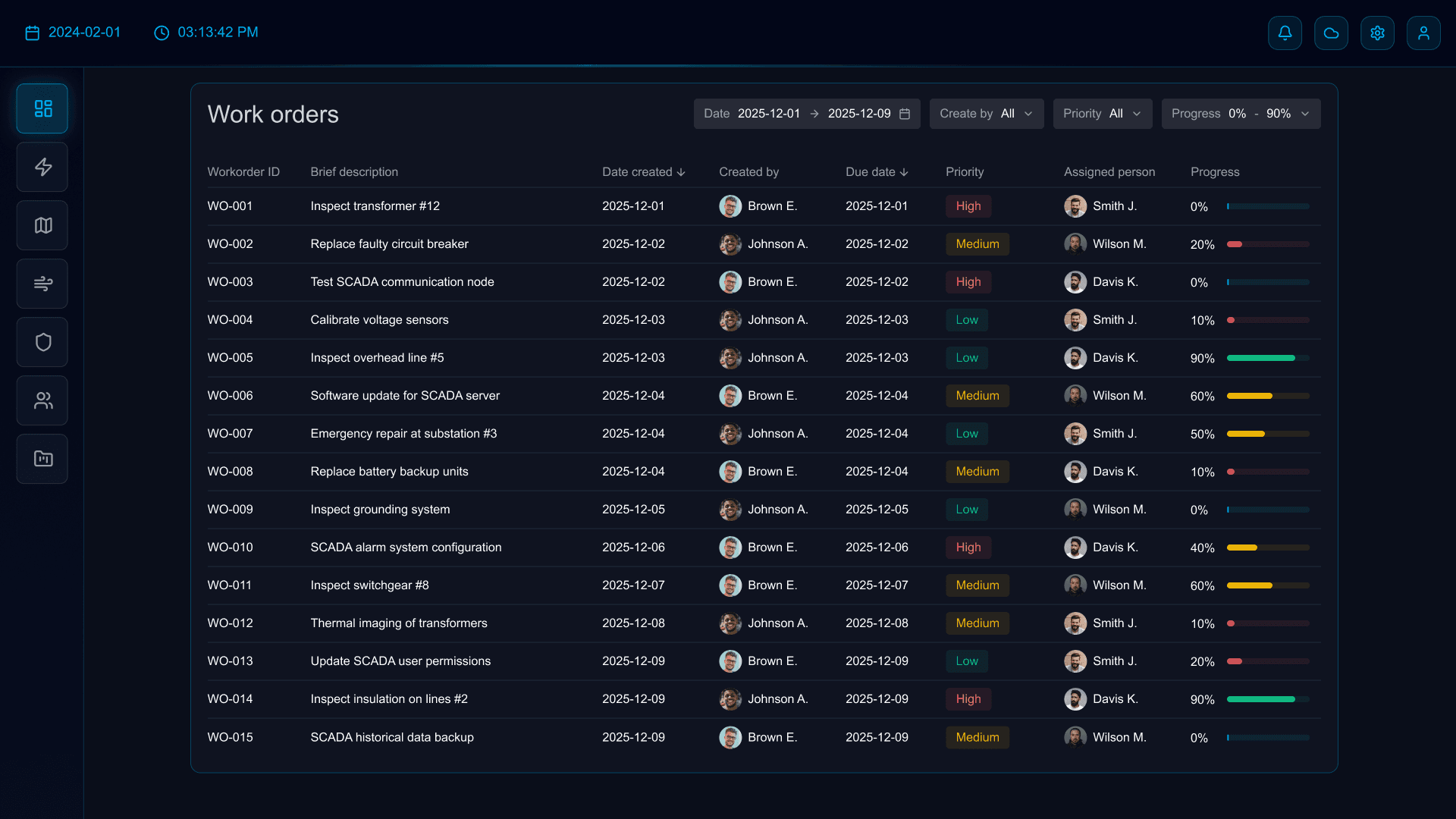
- Third-party integration for digital work orders and maintenance
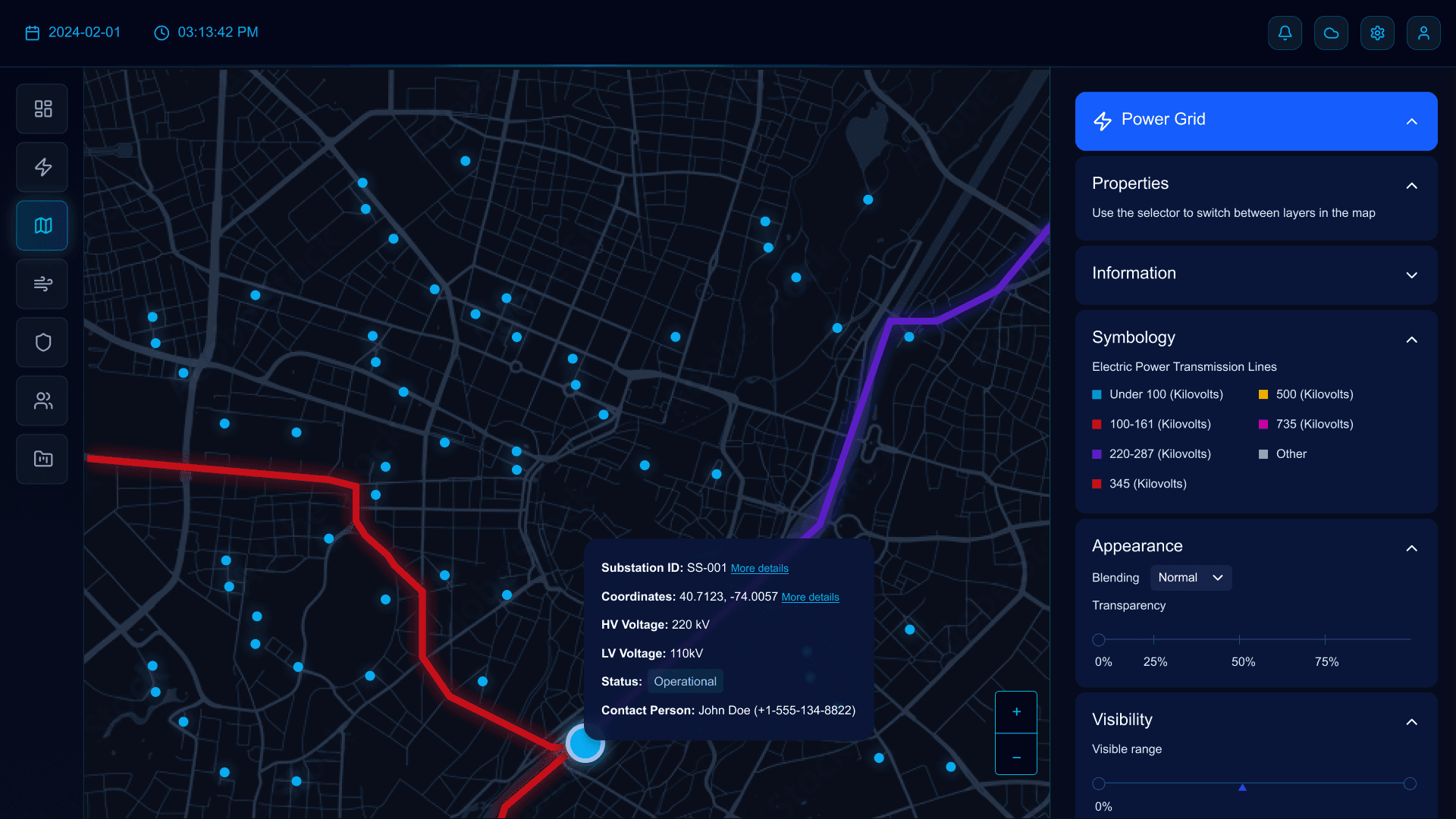
- GIS geospatial visualization for assets, faults, and grid conditions

Results
- Shift from reactive to predictive operations (up to 30% more data-driven)
- Teams trained for more than 50 emergency scenarios
- Energy loss reduced by 10–15% with better load balancing
The Intelligent SCADA twin improved operational maturity, reliability, and scalability while enabling faster decision-making and long-term strategic value.